Showing posts with label INFORMATION/INSTRUCTIONAL DESIGN. Show all posts

INFORMATION/INSTRUCTIONAL DESIGN - Examples


Below are some examples of excellent Information Design
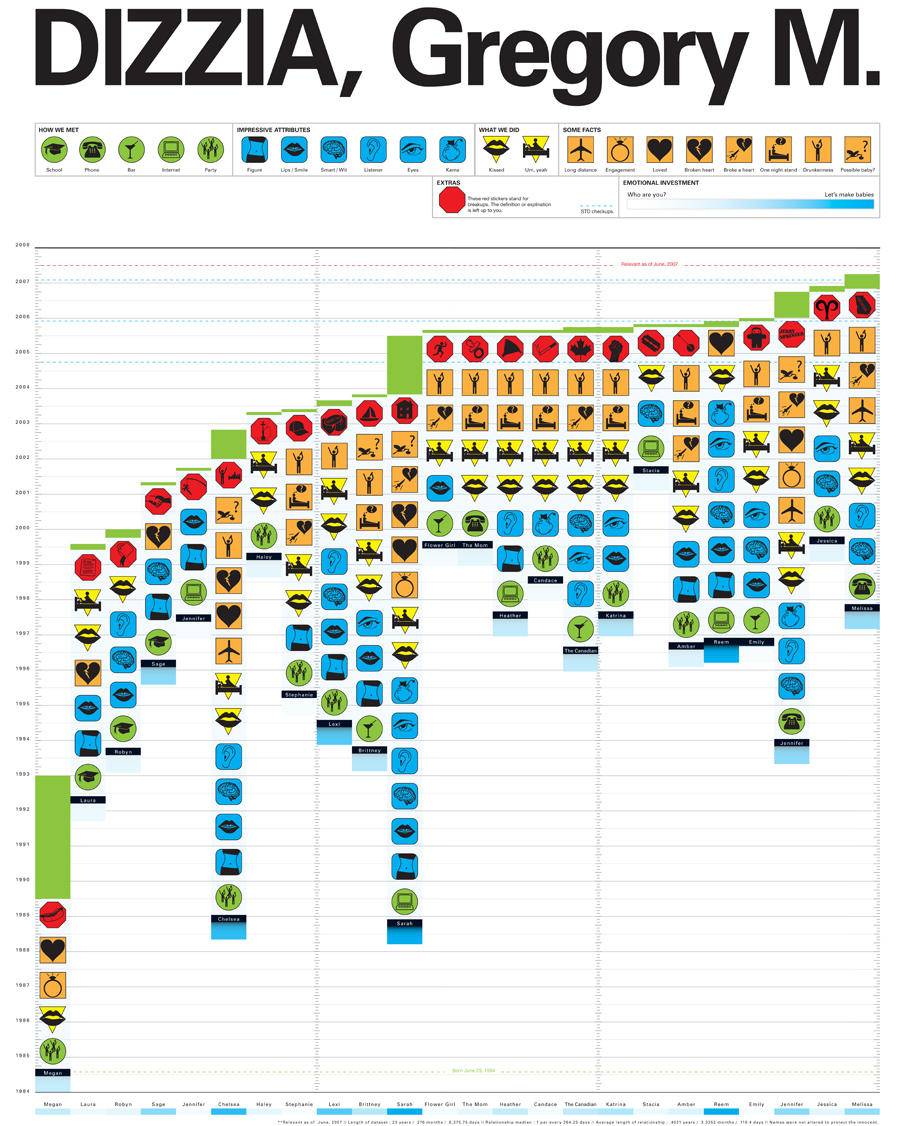
  • Dizza Gregory M Graph - http://fc02.deviantart.com/fs16/i/2007/195/7/d/DIZZIA__Gregory_M___PDF__by_dizzia.jpg. This is a graph created by Gregory Dizza which documents all his significant amorous relationships and what they did (e.g kissing), and the positive attributes of the person (e.g nice eyes, good listener). This Information graphic is a great example as it a graph but is interesting and has illustrated information in a clear, understandable way without being boring.
  • Hidden Cost of War Video - http://www.youtube.com/watch?v=1OT5uw1Fb_0. Below is a video i found on YouTube created by Joseph E. Stiglitz and Linda J. Bilme that illustrates the true cost of the Iraq war and where the Three trillion dollars that the goeverment spent has gone. It presents this information in a clear, understandable yet interesting and unique way. It presents all the relevant information, facts and figures without boring the viewer.

INFORMATION/INSTRUCTIONAL DESIGN - Definition

"Information design is the visual method of explaining and interpreting complex information and data to help the user achieve a particular objective"
Saul Carliner 2002


Information design is about simplifying complex information so that it's easier for people to understand and use. it focuses on users and users systems and business processes to promote it's products and in this way achieve its objectives. information design considers how effectively information is transfered as it simplifies complex information. it is about presenting information on a subject in such a way that it appeals and meets the needs of the target auidence.


R.E. Horn states that "there are three primary objectives of Information Design. They are as follows:
  1. To develop documents that are comprehensible, rapidly and accurately retrievable and easy to translate.
  2. To design interactions with equipment, that are easy and natural.
  3. To enable people to find their way around a three dimensional space with comfort and ease in both real and virtual contexts." - R.E.Horn, Information Design: Emergence of a new profession pp15-33; Information Design, edited by R.Jacobson, 2005.